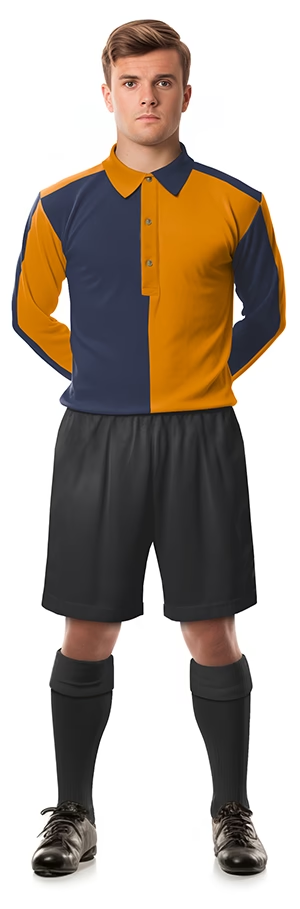
1897-99
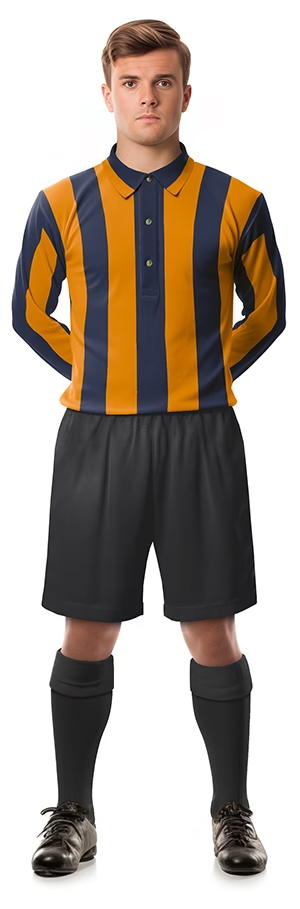
1900s
Headington FC
Oxford United’s story began in 1893 with the founding of Headington FC at the Britannia Inn, right across from where the old Manor Ground would later stand. In its early years, the club fielded several amateur teams, often playing on different days of the week. The "United" suffix appeared erratically during the first two decades.
The club led a fairly nomadic existence, playing on Wootten’s Field (near the Black Boy pub), the Quarry Recreation Ground and Cowley Barracks.
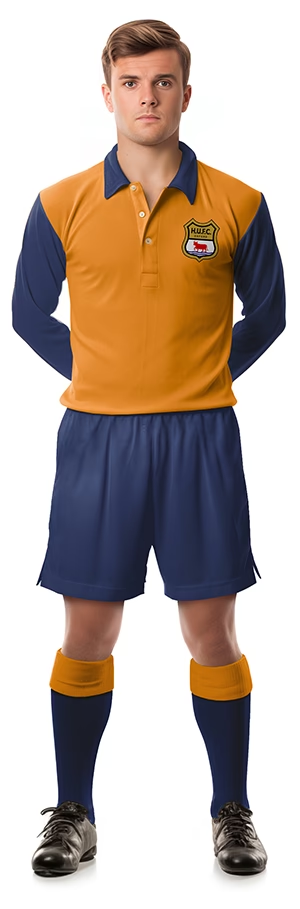
There are no photographs to confirm the early kit colours due to black-and-white photography. However, team sheets and programme notes consistently describe the colours as "Orange and Navy".
Headington United FC
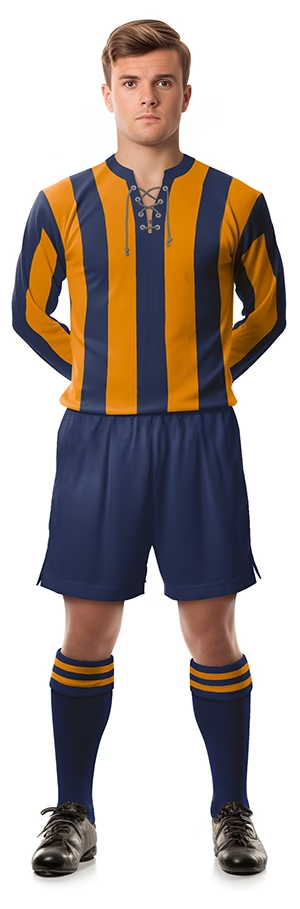
1913
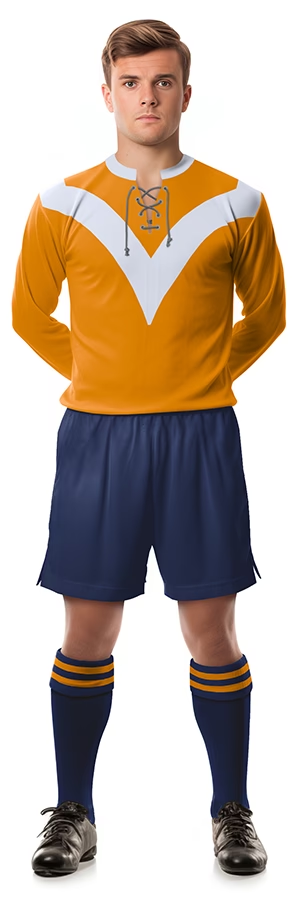
1921
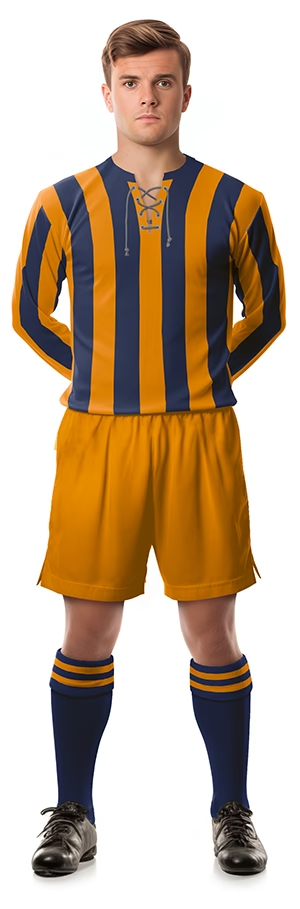
1930
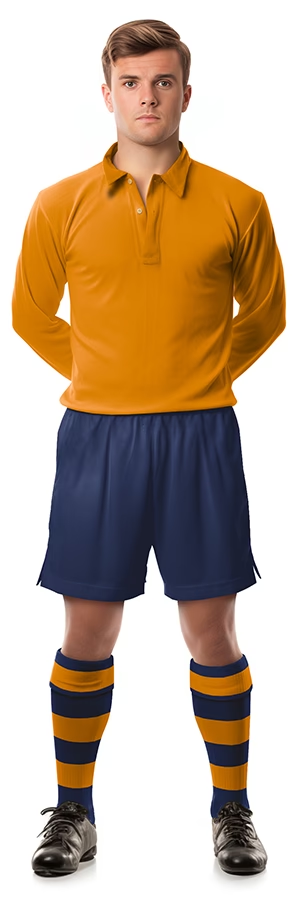
1935
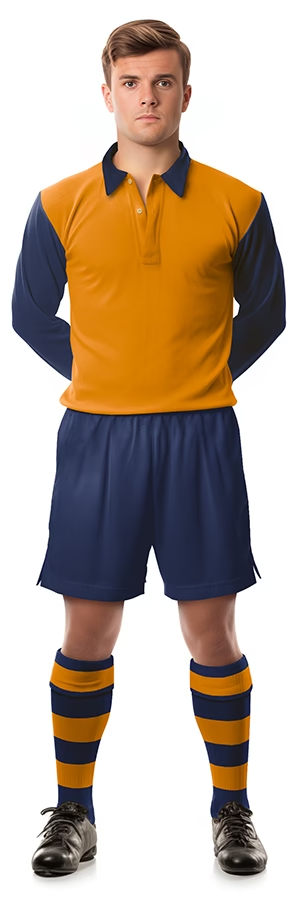
1936
In 1911, Headington FC merged with a neighbouring team, Headington Quarry, officially forming Headington United Football Club.
During the early 20th century, the club experimented with a variety of shirt styles.
In 1925, the club moved to the Manor Ground, sharing the field with Headington Cricket Club.
By the mid-1930s, the club settled on a new look, swapping the traditional stripes for plain orange shirts with navy trim.
The 1940s
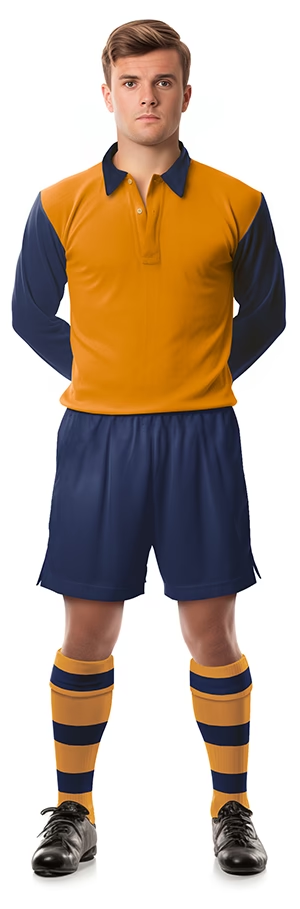
1947
1949
By 1949, Headington United had joined the Southern League, then regarded as the fifth tier of English football. Players were now paid, although the club did not become fully professional until 1959.
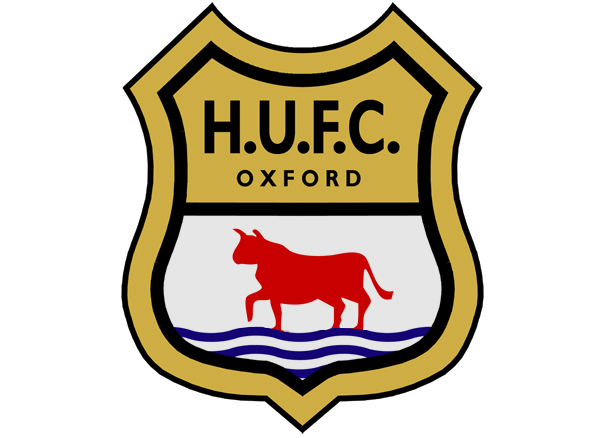
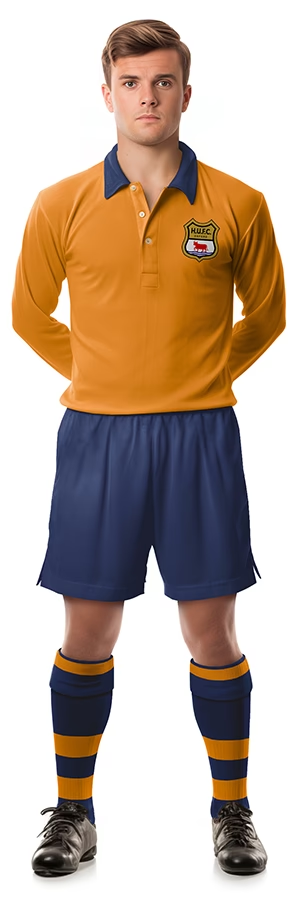
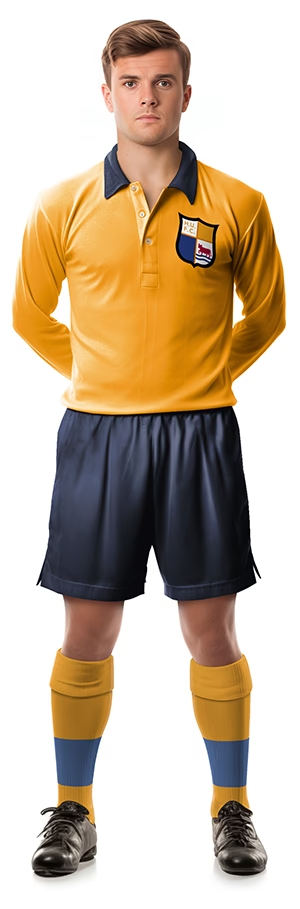
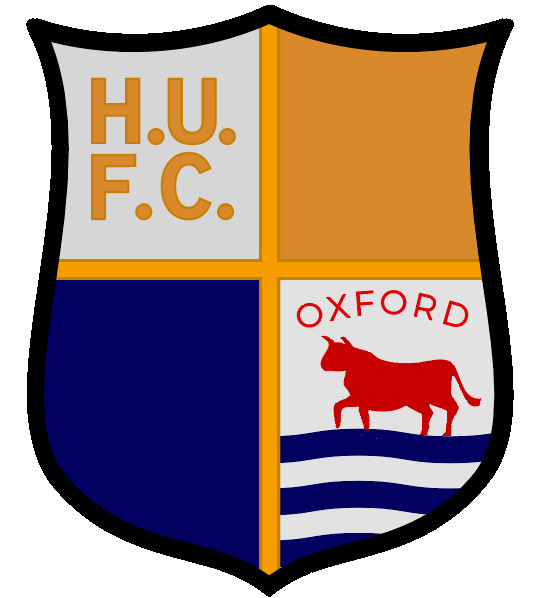
This milestone season also brought a significant change: the club's jerseys featured a crest for the very first time. The emblem, an 'ox on water,' was directly inspired by the city’s coat of arms, proudly linking the club to its Oxford roots.
The cricket club relocated to Cowley Barracks, making way for the Manor Ground’s development as a football ground.
The early 1950s
1950
1952
1953

1954
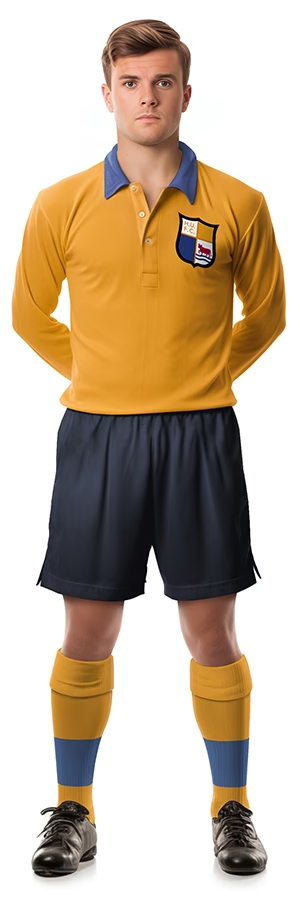
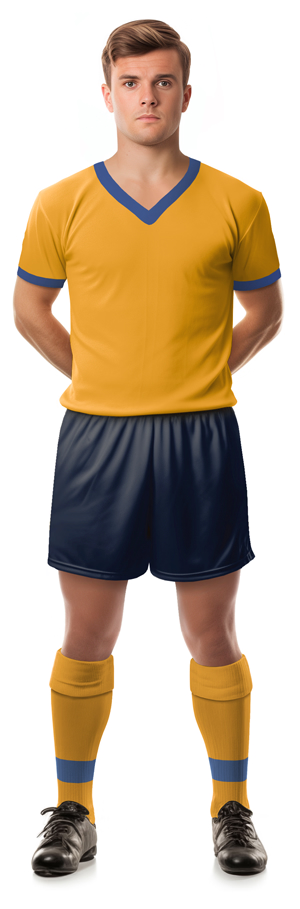
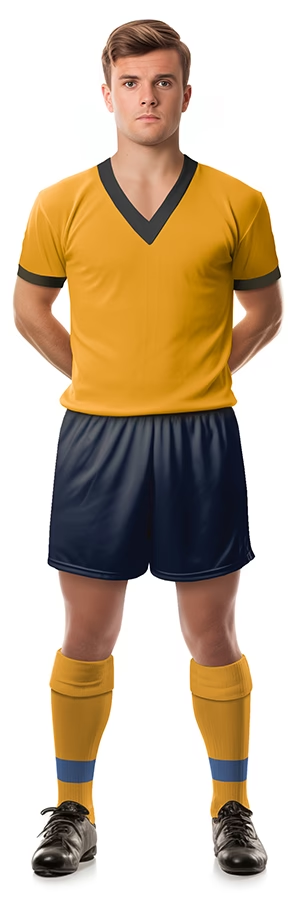
The club made a subtle change to the shirt colour during the fifties, shifting from Orange to what was officially called Amber.
The colour was often mistakenly referred to as "Old Gold", a name traditionally associated with Wolverhampton Wanderers. However, Wolves "Old Gold" dates back to the 19th century and was a muted brown-gold or a Dijon mustard colour.
In 1952, a much larger and updated version of the club crest appeared on the shirts.
The club were crowned Southern League champions in 1952/53, but their application for election to the Football League was unsuccessful, with the club receiving no votes.
The 1953 and 1954 shirts were made from a shimmering 'Rayon' fabric that mimicked silk. It was a popular choice at the time and worked particularly well under floodlights, which were still experimental and fairly dim.
The late 1950s
1956
1957
1959
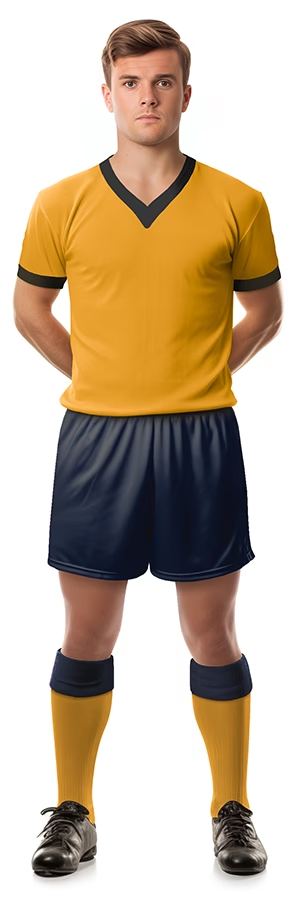
By the late fifties most football kits were shifting toward a simpler look. Collars were pared back, crests were no longer applied, and shorts became noticeably shorter.
Headington United had firmly established itself as the most successful team in the city, prompting the playing side to turn full-time professional in 1959.
Also in 1959, an early effort to rename the club Oxford United was rejected by the Football Association. The club appealed this decision, arguing that Headington was too "parochial" for a side competing nationally.
The FA later reconsidered, and approved the change of name prior to the 1960–61 season.